Site Drainage Assessment
We carefully inspect your property, noting slopes, downpipes, soil and low spots, then recommend a practical drainage plan that solves your water problem and suits your yard, home and budget.


Drainage solutions Brisbane property owners can discuss for roof runoff, surface water, recurring blockages and connected stormwater systems.
Brisbane drainage solutions start with understanding the water: where it comes from, where it collects and where the existing system takes it. A boggy lawn, overflowing inlet and recurring pipe blockage can call for different approaches, particularly where heavy storms meet slow-draining clay.
Discuss the symptoms before choosing a product. Roof runoff, garden levels, paving and underground pipes need to work together, along with Council stormwater requirements. Share photographs and any previous findings so the available assessment and work scope can be confirmed for your property.
Explore Brisbane Drainage Solutions and find the right starting point for your property.
We carefully inspect your property, noting slopes, downpipes, soil and low spots, then recommend a practical drainage plan that solves your water problem and suits your yard, home and budget.
We collect water pooling on lawns, paving and driveways using grated pits, channels and falls, and carry it safely to an approved legal discharge point well away from your home.
Perforated subsoil pipes buried in gravel intercept groundwater and remove excess moisture from soggy yards and retaining walls, helping keep your soil drier and reducing damp problems near your house.
We install French drains with filter fabric, gravel and slotted pipe to intercept and redirect water, protecting garden beds, lawns and building edges from persistent, damaging waterlogging all year round.
We connect roof downpipes to underground stormwater lines or approved discharge points, preventing roof runoff from pooling beside your house and protecting footings, slabs, fences and landscaping from long-term damage.
If heavy rain regularly floods your yard, garage or entryway, we design and install pits, pipes and diversion drains that move water away quickly and reduce the risk of damage.
Different symptoms can share a drainage route. Describe the whole pattern so the assessment can focus on the likely cause.
| What you notice | What to investigate | Related scope |
|---|---|---|
| Water after rain | Catchment, surface levels and collection | Stormwater or landscape drainage |
| Recurring blockage | Pipe condition and obstruction history | Inspection and targeted drain repairs |
| Overflow at paving | Channel inlet, outlet and surrounding falls | Paving and channel drainage |
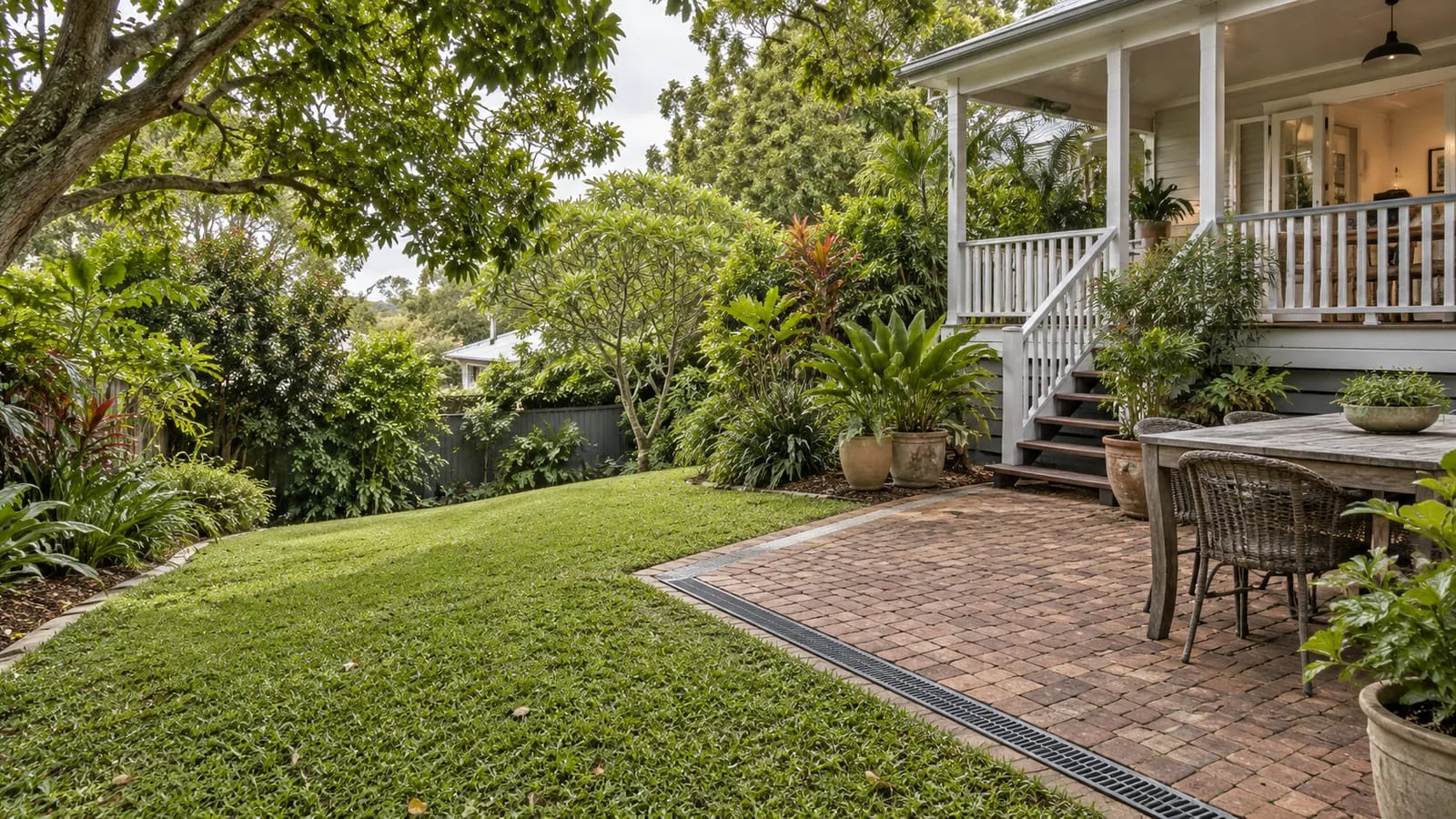
A lawn that stays soggy for days after rain suggests water has nowhere to go. In slow-draining clay, small changes in garden levels or edging can make a large difference.
Observe how water moves across the garden during and after storms, and photograph where it collects. Compare soil levels against paths, patios and garden edges, since raised beds can trap water. Compacted clay drains slowly, so an infiltration pit, subsurface drain or regrading may be discussed. Consider where the water can lawfully go before choosing a fix.
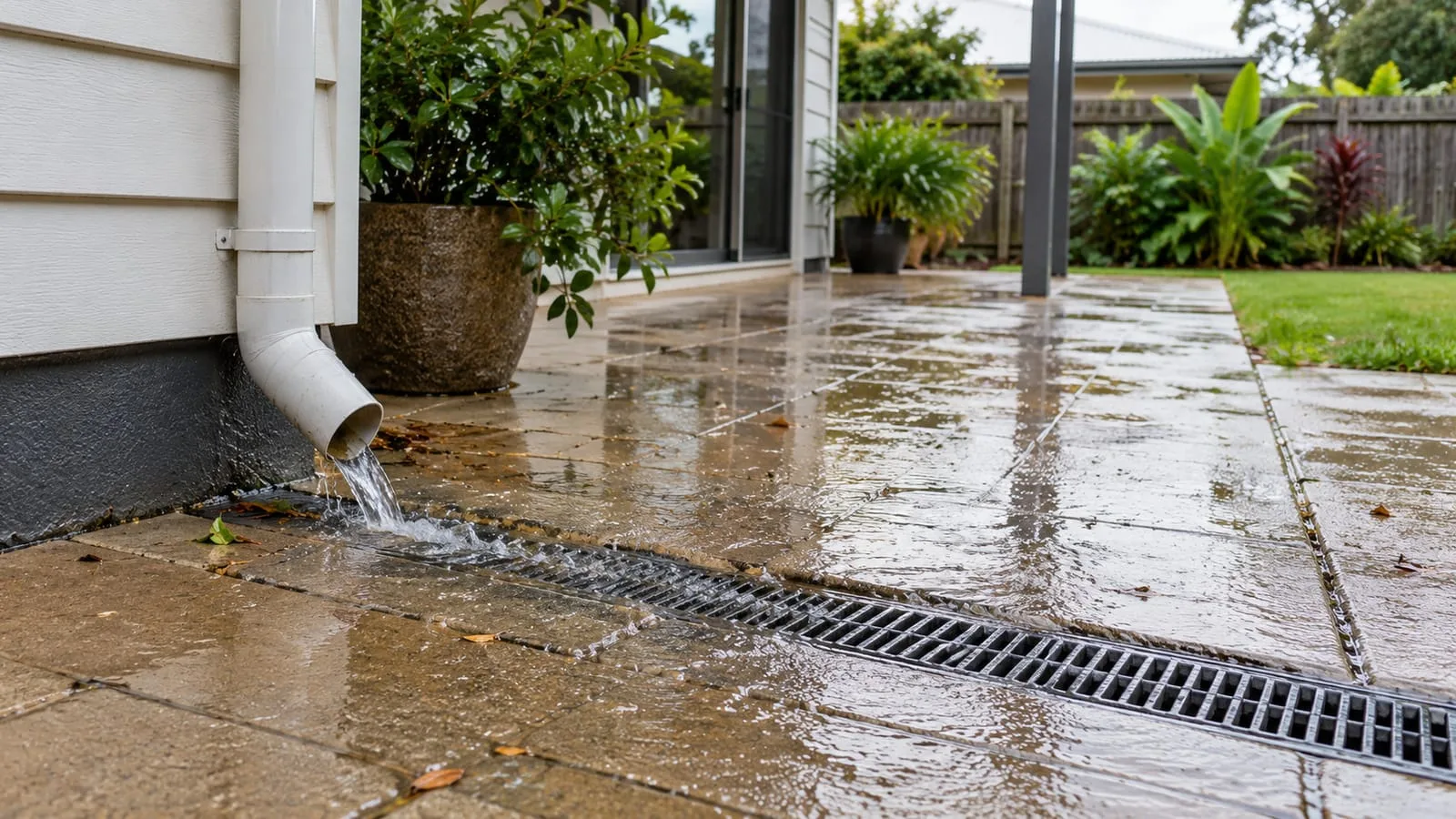
Tin roofs shed water fast, and a Brisbane storm can overwhelm gutters and downpipes. Overflows often point to blockages, undersized outlets or a stormwater connection that cannot cope.
Safely observe where water spills during heavy rain, and note whether it comes from the gutter, a box gutter, a downpipe joint or the ground inlet. Leaf litter in gutters and pit grates is a common cause. Where the stormwater connection itself is blocked or damaged, tracing the route may help identify where the system is failing.
Gutter edges, downpipe joints and ground inlets overflow for different reasons, so observe which one is struggling.
Leaves from overhanging trees choke gutters and grates. Clear them safely before storm season starts.
Box gutters on older homes can block with debris and cause water to spill back into roof cavities.
If the ground inlet floods, the underground connection may be blocked or damaged and need investigation.
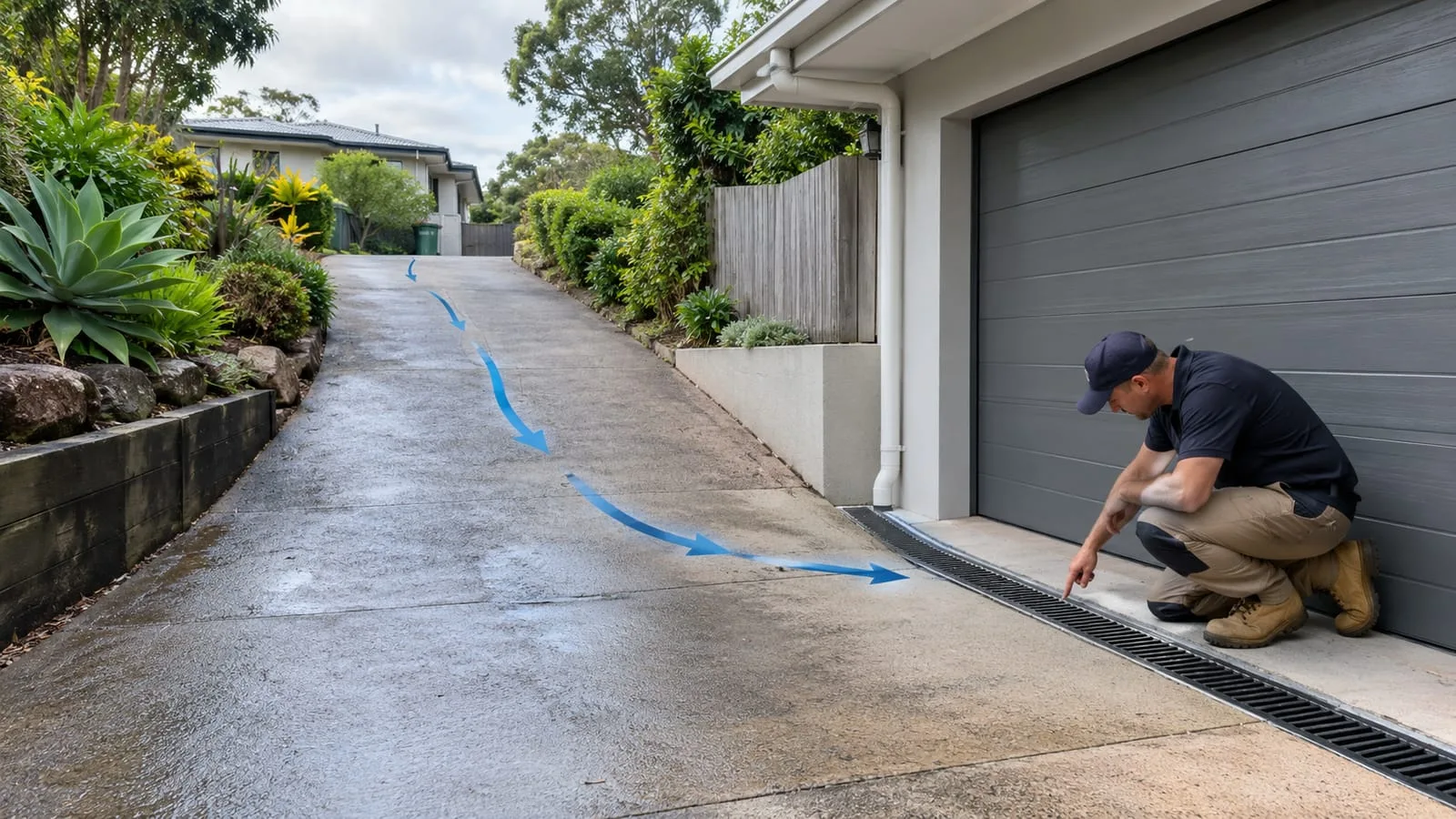
On sloping blocks, water from the street, driveway or a neighbour can head straight towards garages and doors. Stopping it needs a plan that suits the shape of the land.
Walk the driveway during rain and note where water enters your property and where it ends up. Channel drains across driveways intercept flow before it reaches the garage, but they need a clear outlet. Overland flow paths should not be blocked or redirected onto neighbours. Confirm with Council or a qualified professional what is allowed for your site.
Note whether flow comes from the street, a neighbour or your own roof, as the source affects the solution.
A grated channel across a driveway only works if its outlet connects to a lawful, clear discharge point.
Redirecting water onto a neighbour or blocking a natural flow path can create problems, so check what is permitted.
The threshold at a garage or door is where water causes most damage, so focus your inspection there first.
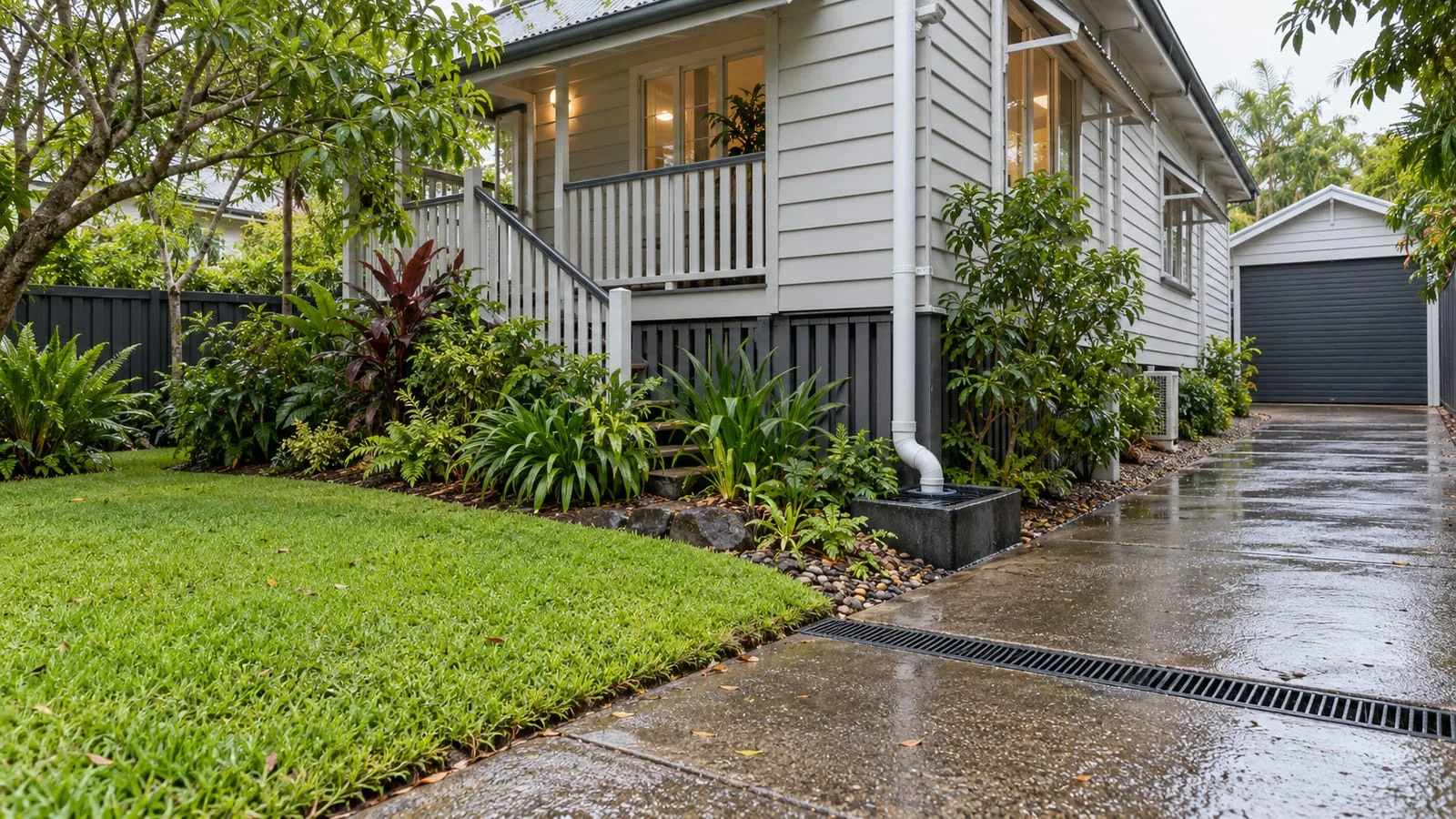
Brisbane's heavy storms can overwhelm poorly drained properties. We design and install practical drainage solutions that move water away from your home, protecting your foundations, garden and outdoor living spaces.
Every site sheds water differently, so a drainage fix should suit the property rather than follow a template. We assess your slope, soil and runoff, design a system to handle Brisbane's downpours and direct water to a legal discharge point, then install and reinstate it as one team, so your home and garden stay protected each wet season.
That depends on the cause. An existing connection may need clearing or repair, or surface levels and collection may need attention. An assessment helps establish the scope.
Yes. Include downpipes, paving and garden levels in the brief so the connected water route can be considered.