Electric Hot Water Systems
We quickly repair, replace and install electric storage and instantaneous hot water systems, sizing units to your household or business so you always have enough hot water without wasting energy.


Discuss hot water repairs and replacement options suited to your household or premises.
Running out of hot water, finding a puddle beneath the tank or noticing unreliable temperatures usually means your system needs attention. In Brisbane, households choose between solar, heat pump, electric and gas options, each with different strengths, and mild winters suit solar and heat pump systems well. Knowing your options makes decisions easier.
The best system depends on how much hot water you use, the space available and what is already installed. Share your situation with us, and we can help you plan a repair or replacement that suits your household or premises. Good planning helps the new system suit your needs.
Explore Brisbane Hot Water Systems and find the right starting point for your property.
We quickly repair, replace and install electric storage and instantaneous hot water systems, sizing units to your household or business so you always have enough hot water without wasting energy.
Our licensed, experienced gas fitters install and service gas storage and continuous flow systems, testing connections, flues and pressure relief valves so your system runs safely and efficiently for years.
We install and connect solar and heat pump hot water systems, helping you reduce energy use and running costs while achieving dependable hot water all year round in Queensland's climate.
Leaking tanks, faulty thermostats, failed elements and tempering valve problems are all repaired quickly, restoring hot water and helping you avoid unnecessary replacement. Accurate diagnosis saves you time and money.
When a hot water system fails, we remove the old unit, install a suitable new one, test water pressure and temperature and leave your property clean and ready to use.
We install and replace tempering valves, pressure relief valves and isolation valves, helping protect your household from scalding and system damage and keeping your hot water compliant at all times.
Heat pump hot water units draw warmth from the surrounding air, so where they sit matters. Good airflow, access for servicing and sensible drainage all affect how the system lives on your property.
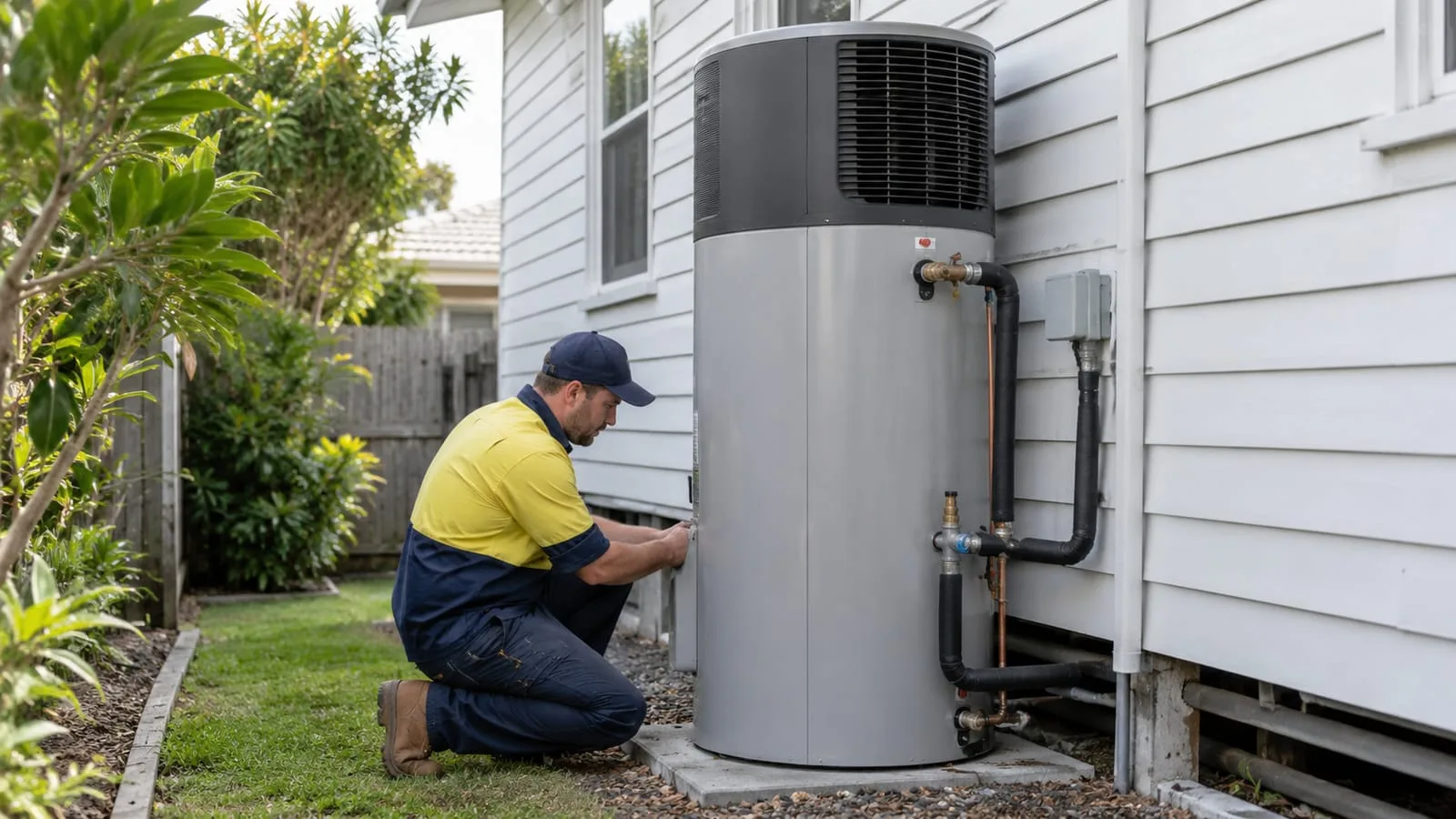
Allow open space around the unit. Cramped gaps behind fences or bins can reduce performance and make servicing harder.
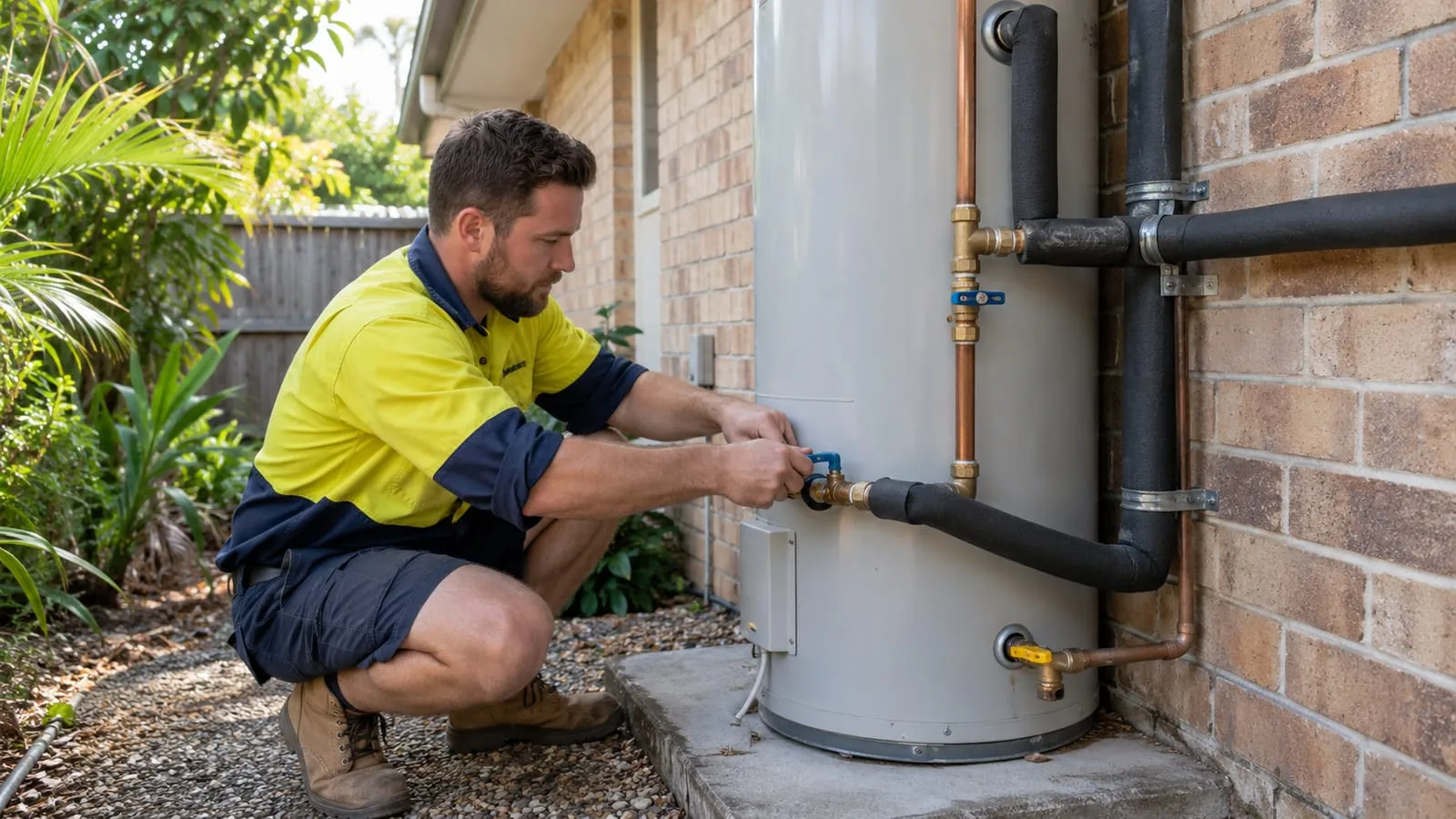
A level slab or pad keeps the unit steady and stops water pooling around its feet in heavy summer rain.
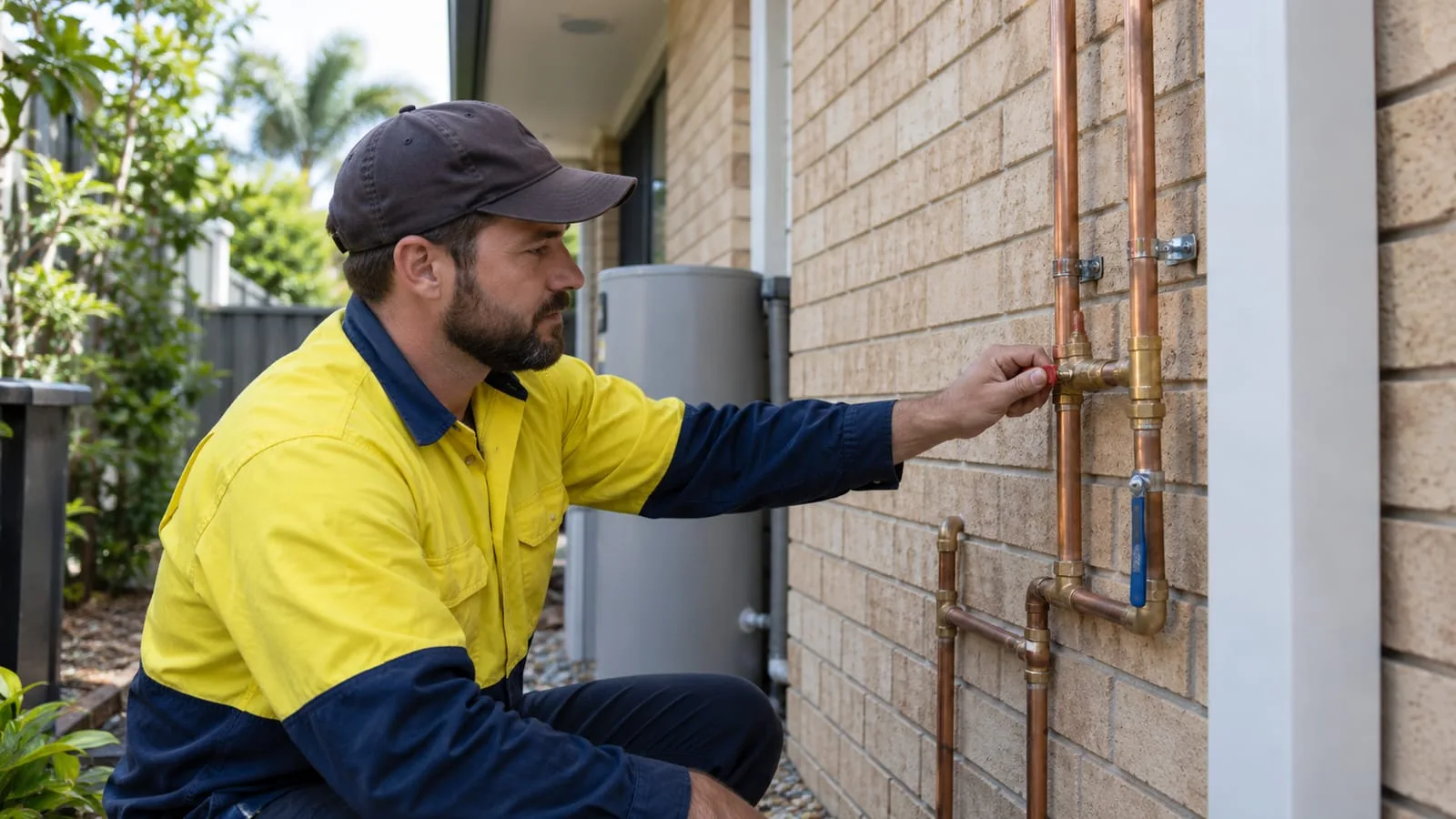
Ask where condensate and relief valve discharge will go so it does not soak garden beds or cross boundaries.
Walk the property with your installer and look at side passages, carport edges and garden zones. The unit needs clearance for air in and out, a stable base and reach for pipework and electrical supply. Condensate and relief water must be directed somewhere sensible, not onto a neighbour’s fence line. Consider noise near bedrooms and how you will reach the unit for future servicing.
A hot water system is more than the tank or unit. Valves, insulation and pipe routes decide how safely and efficiently hot water reaches your taps and showers.
Ask your plumber how hot water leaves the unit and how it is controlled at the outlets. Tempering devices help limit scalding at taps, and insulated pipe runs keep heat in. Long pipe distances to a far bathroom can mean waiting for warm water. In older Queenslanders, pipes may run under the house or through walls, so ask about access and any visible corrosion.
Ask how water is tempered before it reaches bathrooms, particularly where children or older residents live.
Insulating exposed hot pipes reduces heat loss and wasted water, especially along under-house and outdoor runs where temperatures vary.
A distant bathroom can mean wasted water while you wait. Ask whether relocation or pipe changes would help.
Green staining or flaking on fittings is worth photographing and showing your plumber during any visit.
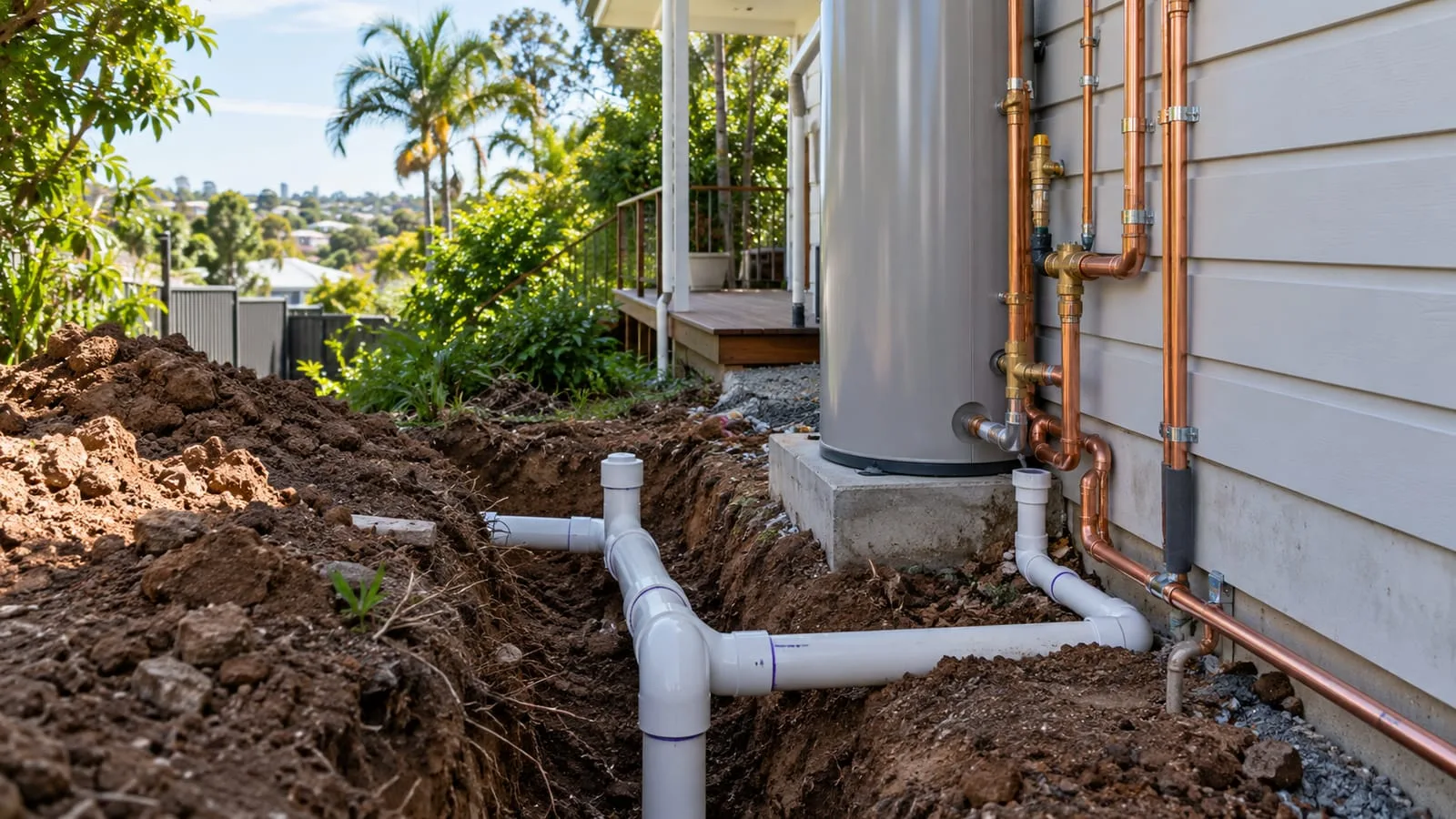
Hot water systems rarely fail without hints. Rusty water, puddles, odd noises and fluctuating temperatures all suggest it is time for an assessment, ideally before a cold shower makes the decision.
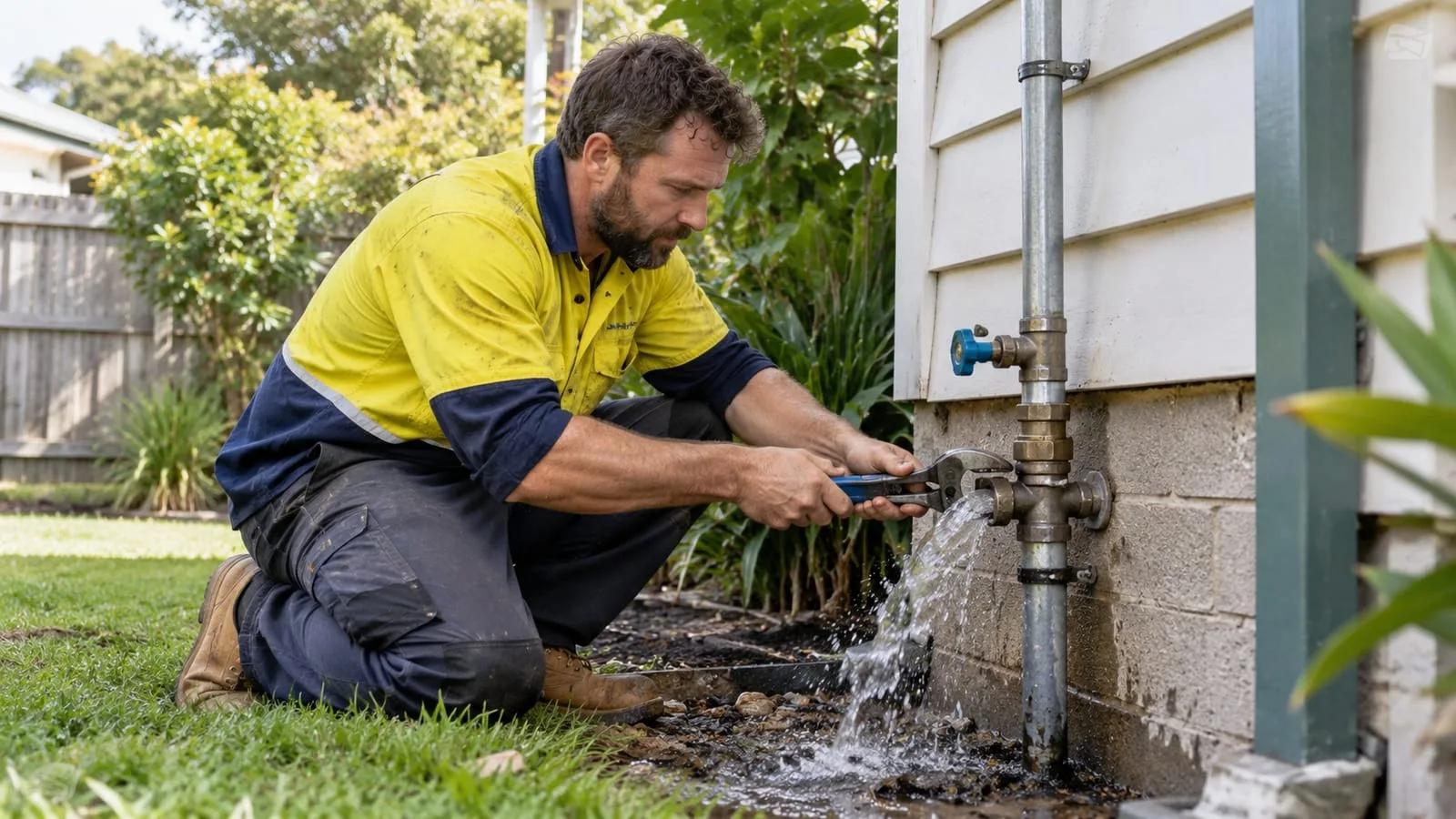
Check around the base of the unit for damp patches, staining or drips from the relief valve line. Note the age shown on the data plate and any discolouration in hot water only. A sudden loss of hot water, repeated tripping or constant running deserves attention too. Photograph what you find and share it, so your plumber can judge between repair and replacement.
Water around the base, rust streaks or a constantly dripping relief line can signal internal problems or fittings nearing their end.
Brown water from hot taps only, while cold runs clear, often points toward the heater rather than the mains supply.
Banging, hissing or a unit that runs constantly can indicate scale, sediment or component wear worth investigating.
The data plate often shows a manufacture date. Combine age with symptoms when planning repair versus replacement.
No hot water is a daily frustration. Our licensed plumbers repair, replace and install hot water systems quickly, helping Brisbane households, families and businesses get reliable, efficient hot water again.
| Fast Repairs and Replacements | We diagnose faults quickly and fix most common hot water problems on the spot, and when a system is beyond repair, we arrange prompt replacement to restore your hot water. |
|---|---|
| Right System, Honest Advice | We explain the differences between electric, gas, solar and heat pump systems and recommend the best fit for your household size, budget and running costs, so you choose with confidence. |
| Energy-Efficient Options | Modern hot water systems can cut energy use quite significantly. We help you choose efficient models suited to Queensland's climate and can advise on available rebates and ongoing energy savings. |
| Licensed, Compliant Installation | Our licensed plumbers and gas fitters install every system to Queensland regulations, test it thoroughly and remove your old unit, leaving you with safe, dependable hot water, with no fuss. |

No. A diagnosis and the condition of the installation should inform the repair or replacement discussion.
Do not assume they are. Confirm all associated trades and responsibilities in the quote.
Share the make, model, approximate age if known and the issue you are noticing. Photos of the unit and accessible labels can help.
Yes. Describe changes in the number of occupants or hot-water use so the discussion reflects the current needs of the property.
Share the current location and access details. Confirm the suitability of the proposed unit and any associated work before proceeding.
Ask about removal of the existing unit, installation, associated trade work and any exclusions. Confirm product and workmanship documentation with the provider.