Residential Soakwell Installation
We install soakwells for homes and townhouses, sizing and positioning them to handle roof runoff, so stormwater soaks safely into the ground rather than flooding your yard, garage or neighbours.


Explore soakwell and infiltration options in Brisbane, with clay soils, site levels and the receiving system assessed before installation.
A soakaway or infiltration pit is one possible approach to roof and paving runoff, but clay soils across much of Brisbane often drain slowly, so it only suits some sites. Soil assessment, available space and the receiving route need review, and Council or engineer advice may be needed, before a soakwell is selected.
Concrete and modular systems each suit different sites, and an existing pit that overflows may not need replacing at all. Tell us about your property, and we can help you plan a soakwell installation or repair. A proper assessment helps match the system to the lot.
Explore Brisbane Soakwell Installation and find the right starting point for your property.
We install soakwells for homes and townhouses, sizing and positioning them to handle roof runoff, so stormwater soaks safely into the ground rather than flooding your yard, garage or neighbours.
Old, collapsed or silted-up soakwells stop working. We carefully excavate failed units, install new soakwells with fresh filter fabric and gravel, and reconnect your pipes to restore proper stormwater drainage.
We pair soakwells with pits and overflow connections, helping your system capture debris, handle large rainfall events and make future maintenance simple and affordable, giving your property dependable long-term protection.
We connect downpipes, driveway drains and paving drains to soakwells, giving all your surface water a safe place to go and keeping your yard dry, even during heavy summer storms.
We dig soakwell holes accurately and backfill with suitable material, compacting properly and reinstating lawns or paving so your property is clean and tidy and the new system is stable.
We inspect and clean soakwells, pits and connected pipes, removing silt and debris that restrict absorption, helping your system continue to work efficiently through heavy Brisbane storm seasons each year.
A soakwell only works if the surrounding ground can take the water. Across much of Brisbane, reactive clay drains slowly, so soil needs checking before anyone commits to a particular system or size.
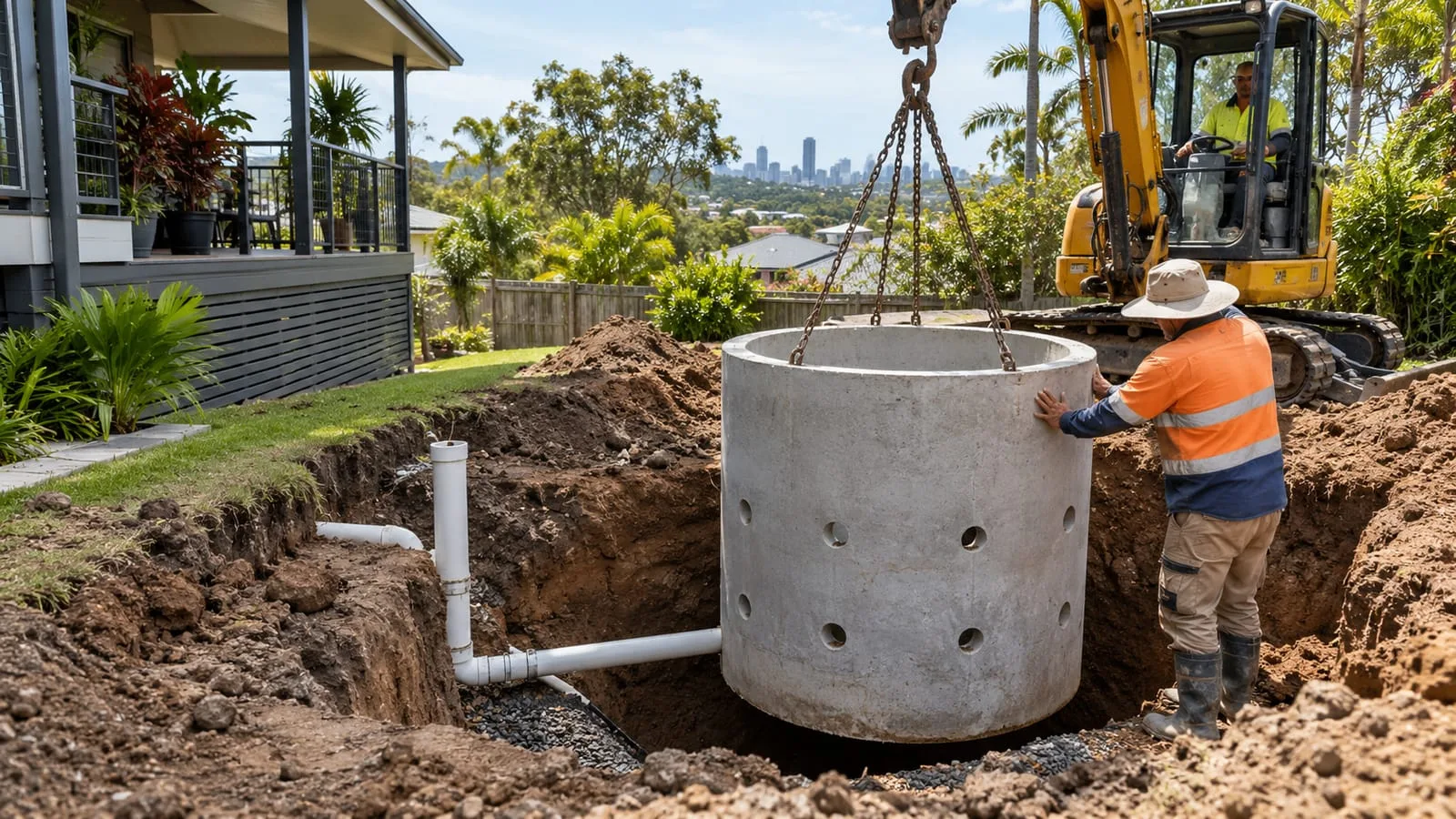
A simple observation can help: after heavy rain, does the garden stay boggy for days, or does water disappear fairly quickly? Slow-draining clay may mean a soakwell fills and overflows, while sandier pockets perform better. A site assessment, and sometimes engineer or Council advice, can confirm whether infiltration suits your lot or whether another discharge route is needed.
Note where water lingers after a storm and for how long, since boggy patches suggest the ground may not absorb much.
A shallow hole filled with water shows roughly how fast it drains, though a professional assessment is more reliable than a backyard test.
Reeds, persistent dampness or a high water table in low areas can make an infiltration pit unsuitable.
If clay is the problem, a connected stormwater route to an approved discharge point may be a better choice than a soakwell.
Soakwells come in precast concrete rings and lightweight modular crate systems. Each has strengths, and the better fit depends on available space, access for machinery, depth and how much runoff the system must handle.
Concrete rings are heavy and sturdy, but they need machinery access and a deeper hole. Modular cells wrap in geotextile and can be assembled by hand in tight yards, which suits narrow Brisbane side passages. Both rely on the same principle: water enters and slowly soaks into the ground, so capacity and maintenance access matter more than the material.
Rings handle light loads and are familiar to many installers, but they need excavator access and a stable, accessible hole.
Crate-style units can fit awkward shapes and low-clearance areas, and they offer a large storage volume for their footprint.
Whichever system you choose, ask about an access lid or inspection point so sediment can be checked and removed over time.
Driveways and vehicle areas need rated covers, and nearby footings can limit where any pit can safely be placed.
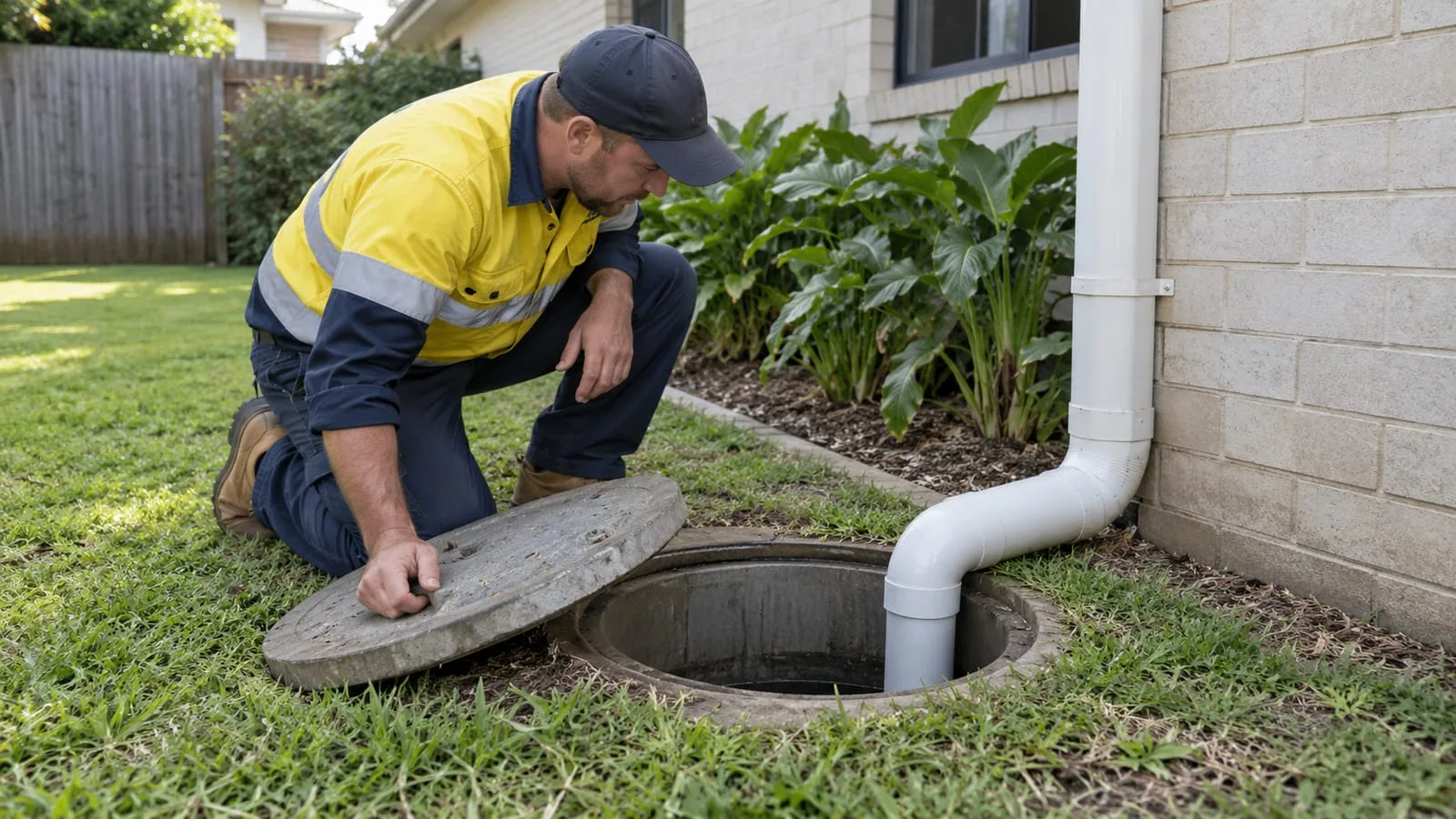
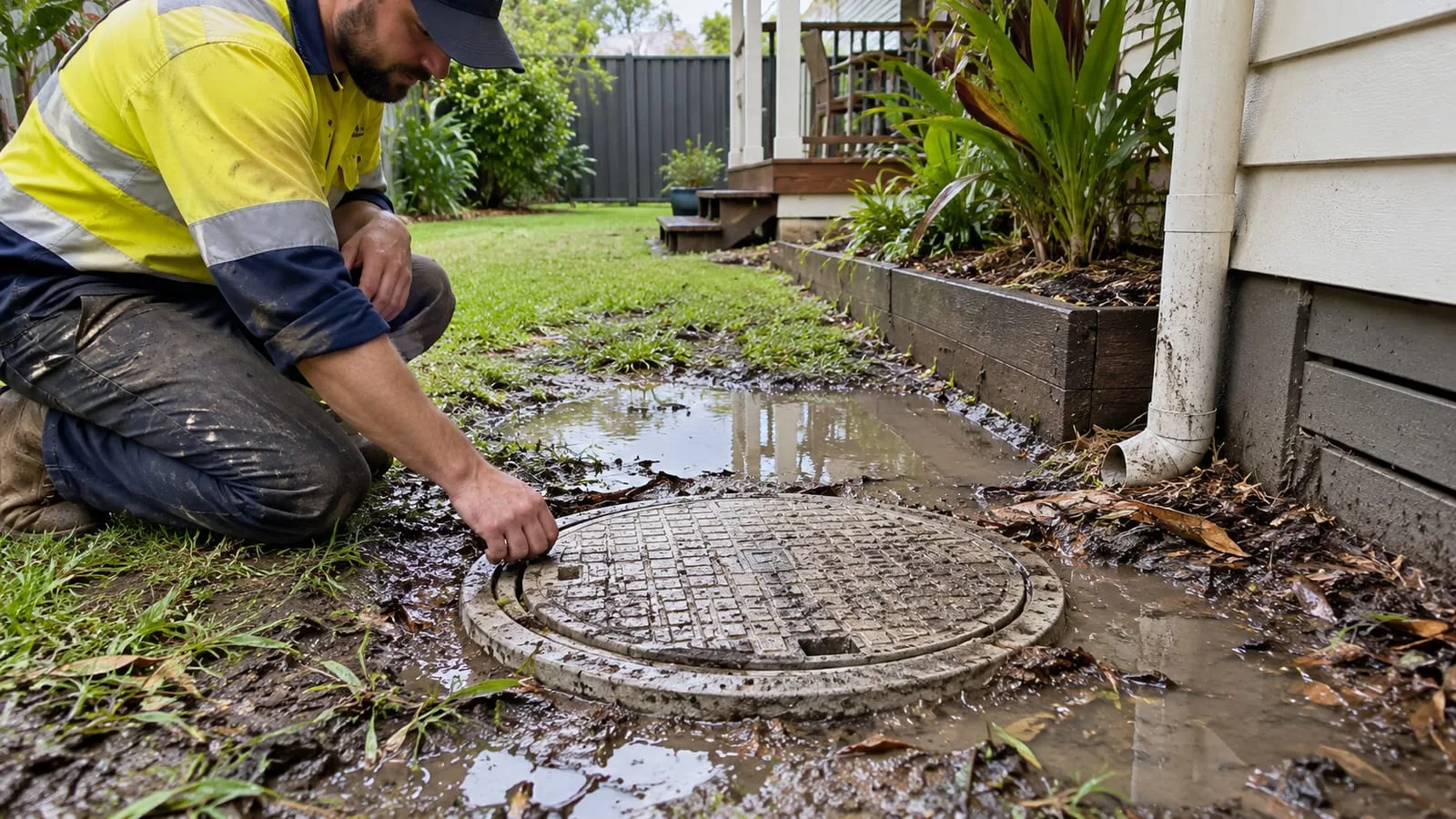
When an older soakwell starts overflowing, the pit may not be too small. Silt, leaf litter, broken inlets and new paved area can all stop water from soaking away the way it once did.
Gutters carry leaves, roof grit and soil into the pit, and over years that material coats the walls and base, sealing the ground against water. Roof extensions and new paving can also send more water to a pit that was sized for less. Look at the pit, the inlet pipe and the surrounding surface before assuming a replacement is the answer.
Lift the lid and look for silt or a muddy layer. A thick deposit usually points to a maintenance problem, not a design flaw.
A crushed or root-filled inlet pipe may send water elsewhere or pond it, so the connection deserves a camera or visual check.
Renovations that add roof area or concrete increase runoff, and the original pit may no longer match the catchment.
Photograph the standing water level in the pit a day after a storm, as it shows how slowly the ground is draining.
Soakwells let stormwater soak safely into the ground instead of flooding your property. Our team designs and installs soakwells correctly, helping manage runoff and protect your home and your garden.
| Correctly Sized for Your Site | We carefully calculate the roof and paved area draining to the soakwell and choose the right size, type and number of units, so the system copes comfortably with heavy rainfall. |
|---|---|
| Proper Siting and Soil Checks | We position soakwells away from foundations, boundaries, pipes and trees, and consider soil absorption, helping water disperse safely without causing damp, subsidence or problems for neighbouring properties or council land. |
| Quality Materials and Installation | We use durable precast or other approved units, filter fabric and clean gravel where required, creating a soakwell that resists collapse and clogging and keeps working reliably for many years. |
| Neat, Efficient Service | We excavate carefully and safely, connect your downpipes and reinstate lawns and paving, completing most installations quickly and efficiently, leaving your whole property tidy and ready for the next storm. |
Not necessarily. Sediment, damaged pipework, slow-draining clay and changed runoff can also affect performance. Investigate the existing arrangement before choosing a replacement.
That depends on the access route and installation area. Ask which surfaces need lifting and whether relaying or replacement is included.
Mention its known location, visible lids, overflow history and any previous repairs. Photos of the area and access route are useful.
Include any added roof, patio or paved areas in the enquiry so the changed runoff can be considered alongside the existing system.
Show gates, narrow side paths and surfaces you want retained. These details help explain the practical constraints of the installation area.
Ask for the proposed work, excavation, removal of old materials and surface reinstatement to be clearly identified. Confirm any exclusions before proceeding.