Kitchen Grease Removal
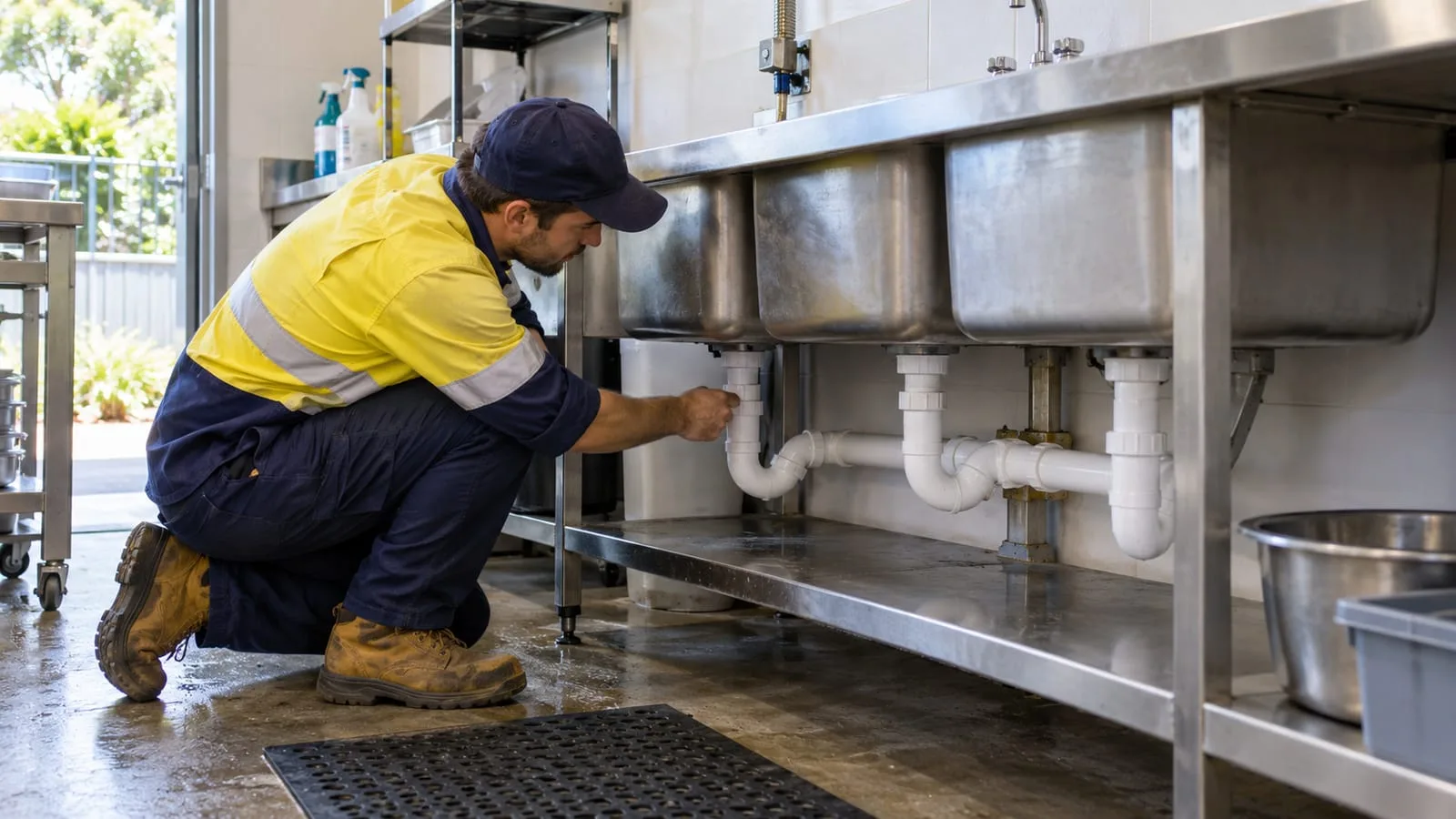
High-pressure water jets strip hardened grease and food residue from kitchen drains and waste lines, restoring full flow and eliminating the foul odours that build up in restaurants and homes.


Discuss water jetting for suitable drains affected by debris, grease or recurring build-up.
Grease, debris and years of build-up can narrow drains until water drains slowly or backs up altogether. High pressure water jetting can clear many of these deposits from suitable pipes, helping restore flow in Brisbane homes, units and commercial properties. Regular attention to drains pays off.
The method needs to suit the pipe material and condition, so jetting is not right for every drain. Tell us about the symptoms you are noticing, and we can help you decide whether cleaning is the appropriate next step. Photos of visible access points can help us understand your situation.
Explore Brisbane High Pressure Drain Cleaning and find the right starting point for your property.
High-pressure water jets strip hardened grease and food residue from kitchen drains and waste lines, restoring full flow and eliminating the foul odours that build up in restaurants and homes.
Specialist rotating cutting nozzles clear roots that have grown into sewer and stormwater pipes, restoring capacity and giving you a clean pipe interior before any inspection or repair work begins.
We flush your main sewer lines to remove silt, scale and debris, preventing overflows and slow drains while helping your system handle everyday household and commercial wastewater reliably and cleanly.
Jetting clears leaf litter, sediment and silt from stormwater pipes and pits, helping your drainage cope with heavy Brisbane summer downpours and reducing the risk of flooding around your property.
Regular jetting suits restaurants, strata complexes and industrial sites, keeping drains clear, flowing and compliant and helping you avoid emergency blockages and odours that disrupt trading, residents and daily operations.
A clean pipe gives a much clearer picture. We jet drains before CCTV inspections so cameras can see the pipe wall, helping identify cracks, joints, roots and other defects accurately.
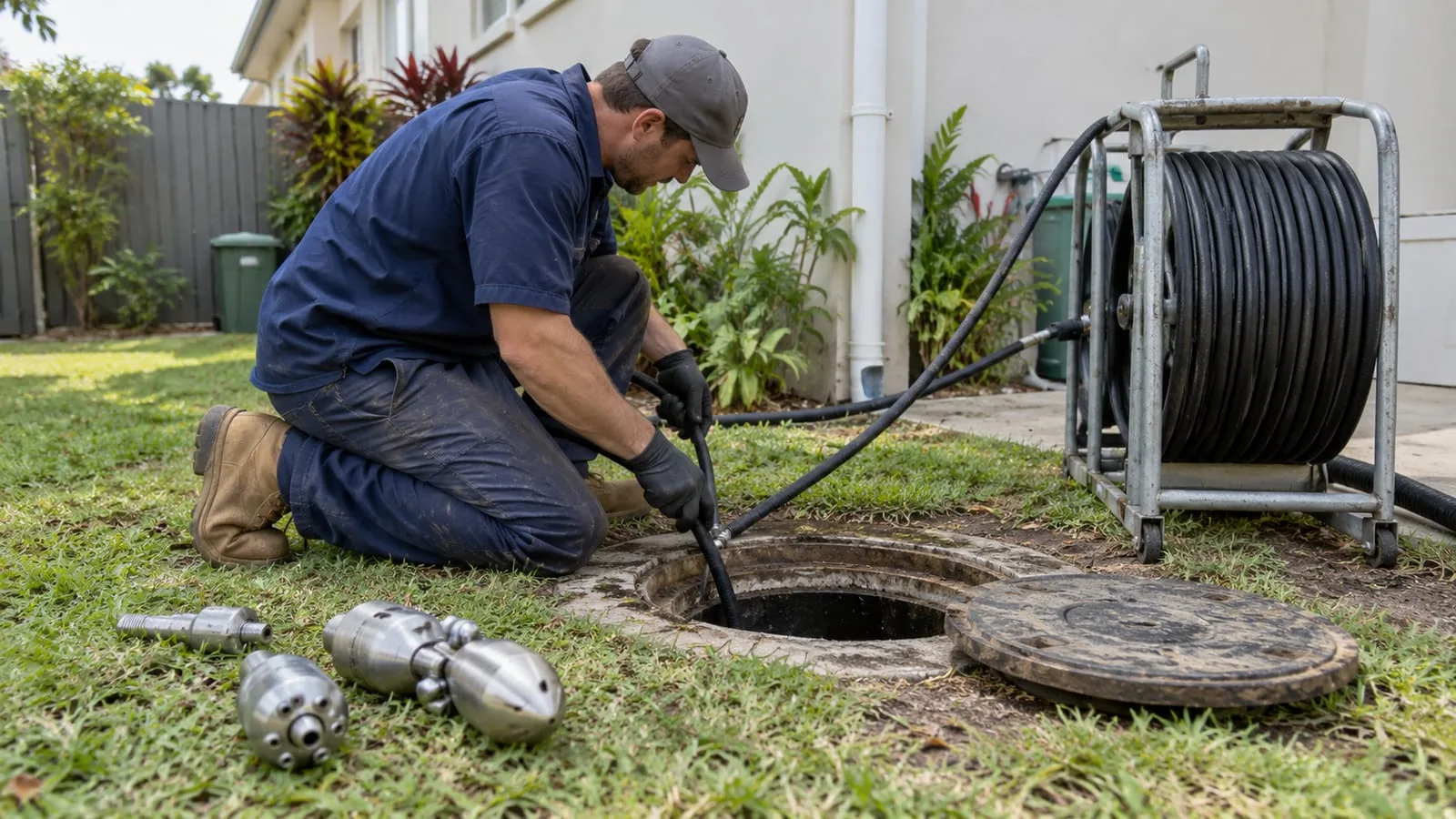
Ordinary plunging and chemical cleaners often move a blockage rather than remove it. When grease, scale, silt and roots coat the inside of a pipe, high pressure water jetting is the most effective way to restore full, unrestricted flow. Recognising when your drains need this deeper clean can prevent repeat blockages, overflows and unpleasant odours. Our high pressure drain cleaning service scours the entire pipe wall using powerful jets and specialist nozzles, suitable for homes, restaurants and commercial buildings across Brisbane. Here are the signs that your drains need more than a quick fix and would benefit from professional jetting.
High pressure cleaning can remove certain obstructions, but the method should suit the pipe material and condition. Fragile or damaged drains may need a different approach, so it helps to know what the pipes are made of and how old they are.
Where a blockage returns, clearing alone may not address the cause. Consider a follow-up inspection to understand whether a structural repair or maintenance plan is appropriate, rather than simply repeating the same cleaning every few months. Doing so can save time and money by dealing with the real cause, such as fig or bamboo roots or a damaged pipe section.
Cleaning equipment and methods should be selected for the actual installation, not applied the same way everywhere. Pipe material, age, access points and the type of buildup all affect what is suitable, so a clear description of the visit helps avoid mismatched expectations.
Water jetting uses a pressurised hose and a shaped nozzle to cut through build-up and flush debris away. Understanding what happens inside the pipe helps you judge when it is the right tool.
Different nozzles do different jobs. Some are designed to scour pipe walls, others to push forward through soft blockages, and others to cut roots. The technician feeds the hose in through an inspection opening and works back and forth. Jetting suits many sound pipes, but a cracked or collapsed line may need a camera check and repair instead of more water.
Forward-thrust, scouring and cutting nozzles each suit different blockages. Ask which was used and why.
Jetting starts from an inspection opening or gully. Clear access nearby makes the job quicker and safer.
Debris is usually pushed or flushed downstream, so the technician should know where the line leads before starting.
Damaged or collapsed pipework can be made worse by pressure. A camera check helps decide before jetting continues.
Older clay and earthenware lines often have joints roots can enter. Jetting can cut and flush roots, but regrowth is common unless the underlying gap is repaired.
| Root cutting heads | Specialised nozzles cut roots from pipe walls, restoring flow. Ask the technician whether the pipe appears sound afterwards. |
|---|---|
| Regrowth likely | If roots entered through a gap, they usually return. Repeat blockages are a signal to look at repair options. |
| Tree proximity | Note which trees sit near the drain line and how far. This helps the technician and any later repair planning. |
| Check with a camera | Looking inside the cleared pipe shows joints, cracks and displaced sections that jetting alone cannot fix. |
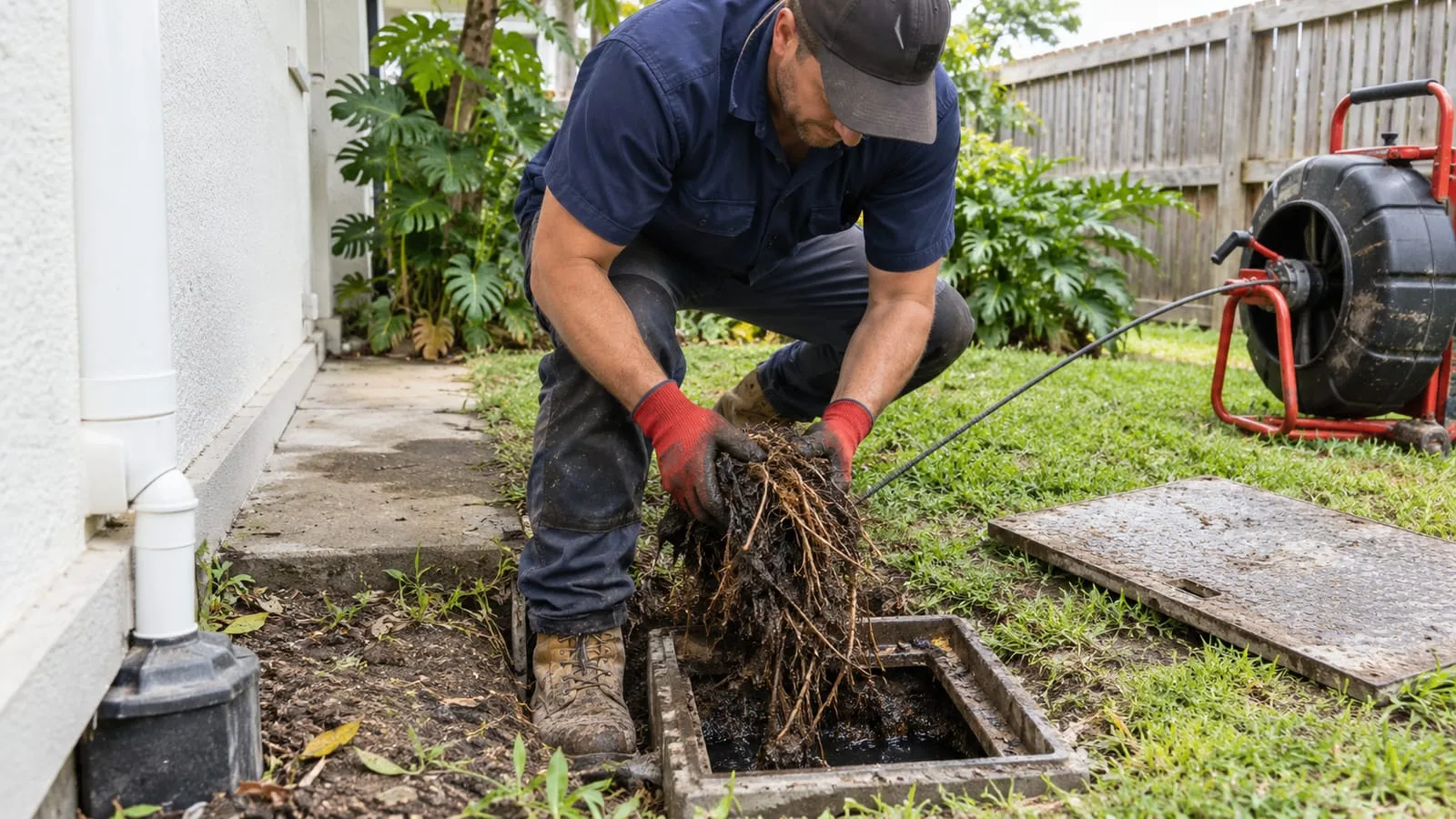
A drain that flows again is good news, but it does not tell you what shape the pipe is in. A follow-up camera run turns a one-off clean into useful information.
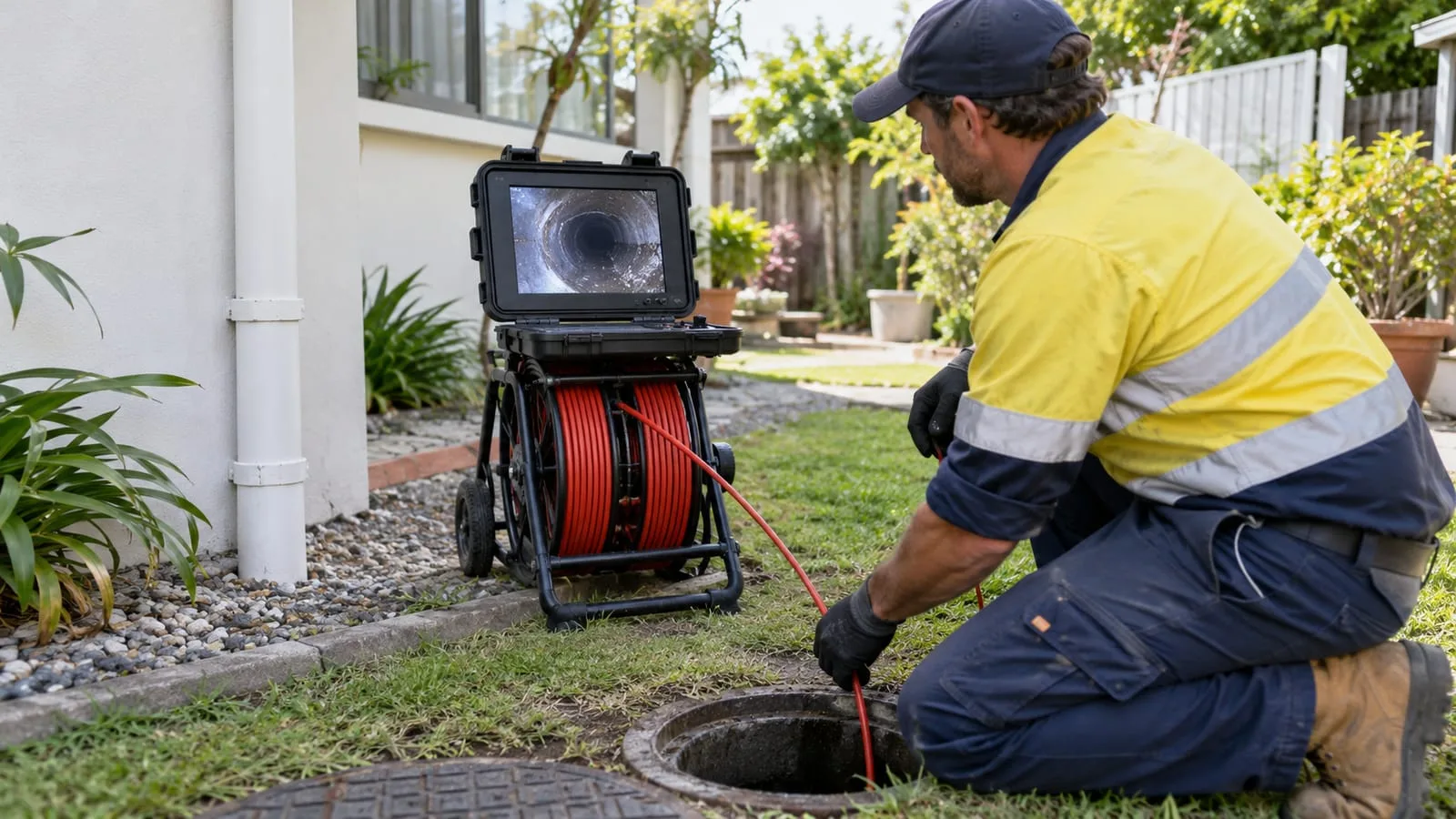
Footage can show open joints and fractures that explain why a drain keeps blocking after being cleaned.
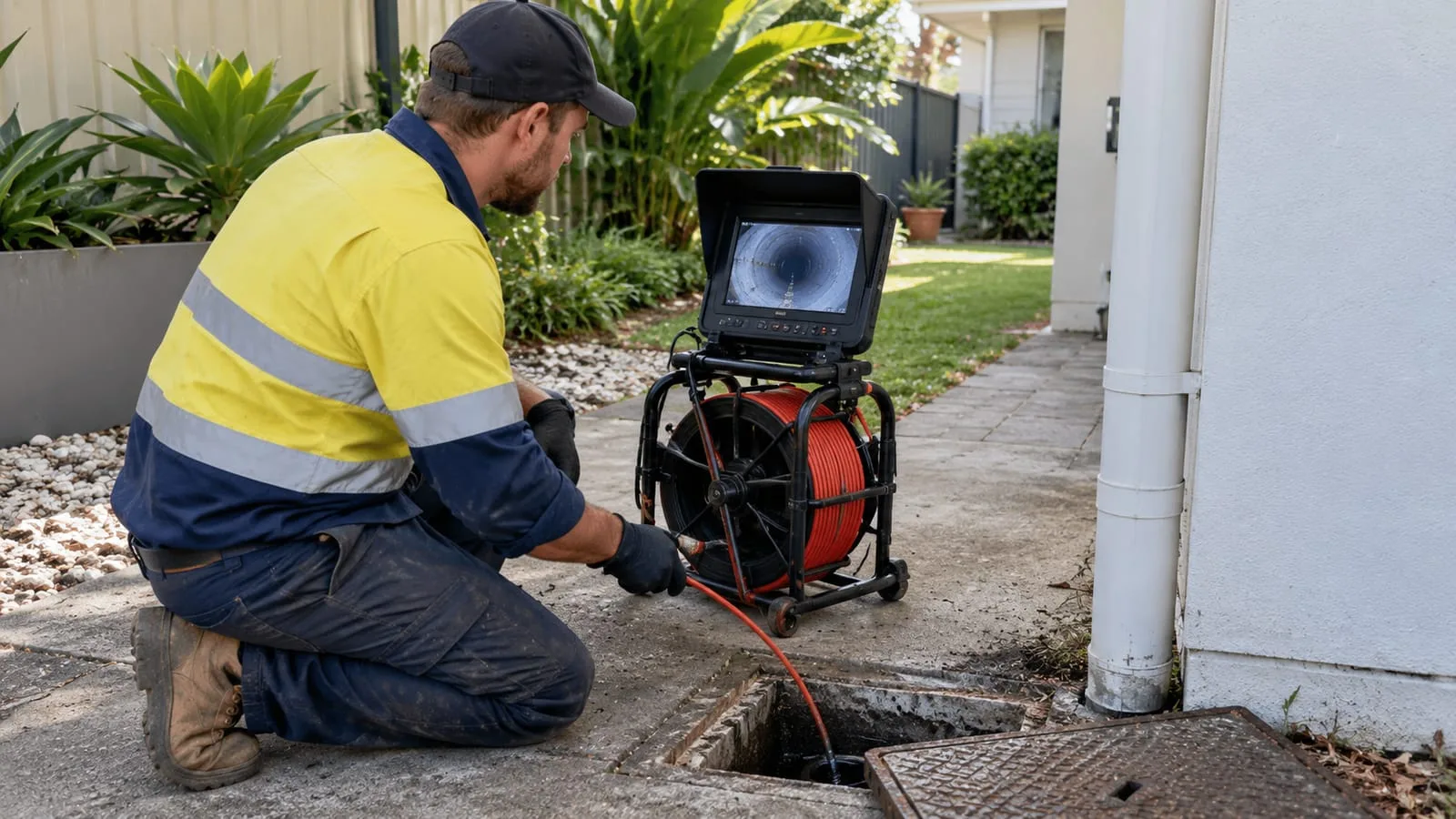
Belly sections hold water and debris. Seeing them on camera helps judge whether cleaning alone will keep up.
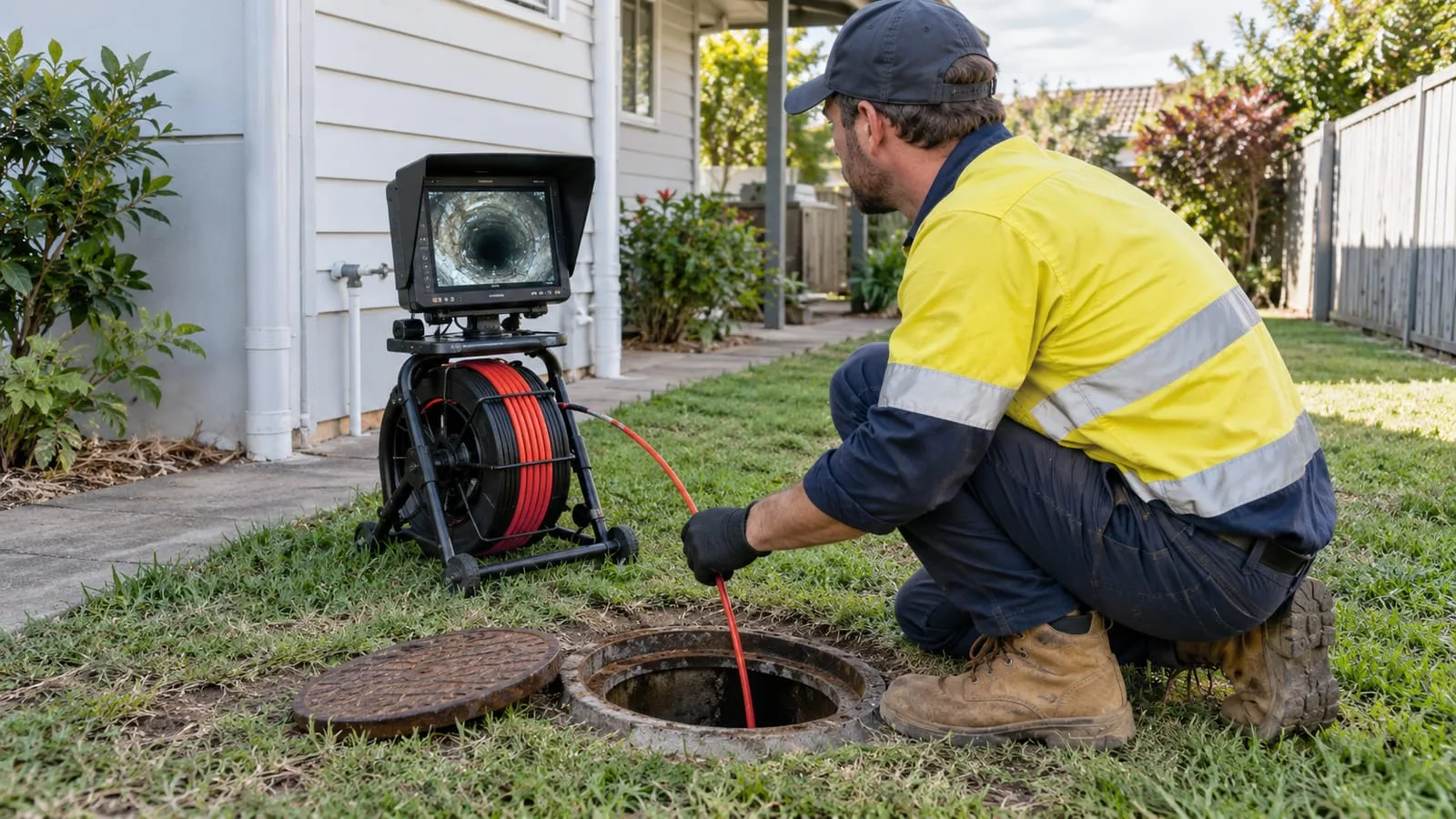
Request recordings or stills with distances noted, so you can share them with another plumber or your body corporate.
After jetting, a camera can travel the cleared line and record what is left. Look for cracks, displaced joints, sags where water pools and any remaining root intrusion. Ask for the footage or screenshots and a short written note on locations. Keep these with your property records. They help you decide between regular maintenance cleaning, spot repairs or longer-term pipe work.
Our high pressure drain cleaning removes grease, silt, scale and tree roots that ordinary tools cannot, restoring full flow to your pipes and helping prevent repeat blockages and costly call-outs.
High-pressure jetting cleans the whole pipe rather than punching a hole through a blockage. We match the nozzle and pressure to your pipe, clear grease, silt and roots, and can inspect the line first, so drains are restored to full flow safely and a sensible cleaning schedule can keep repeat blockages away.
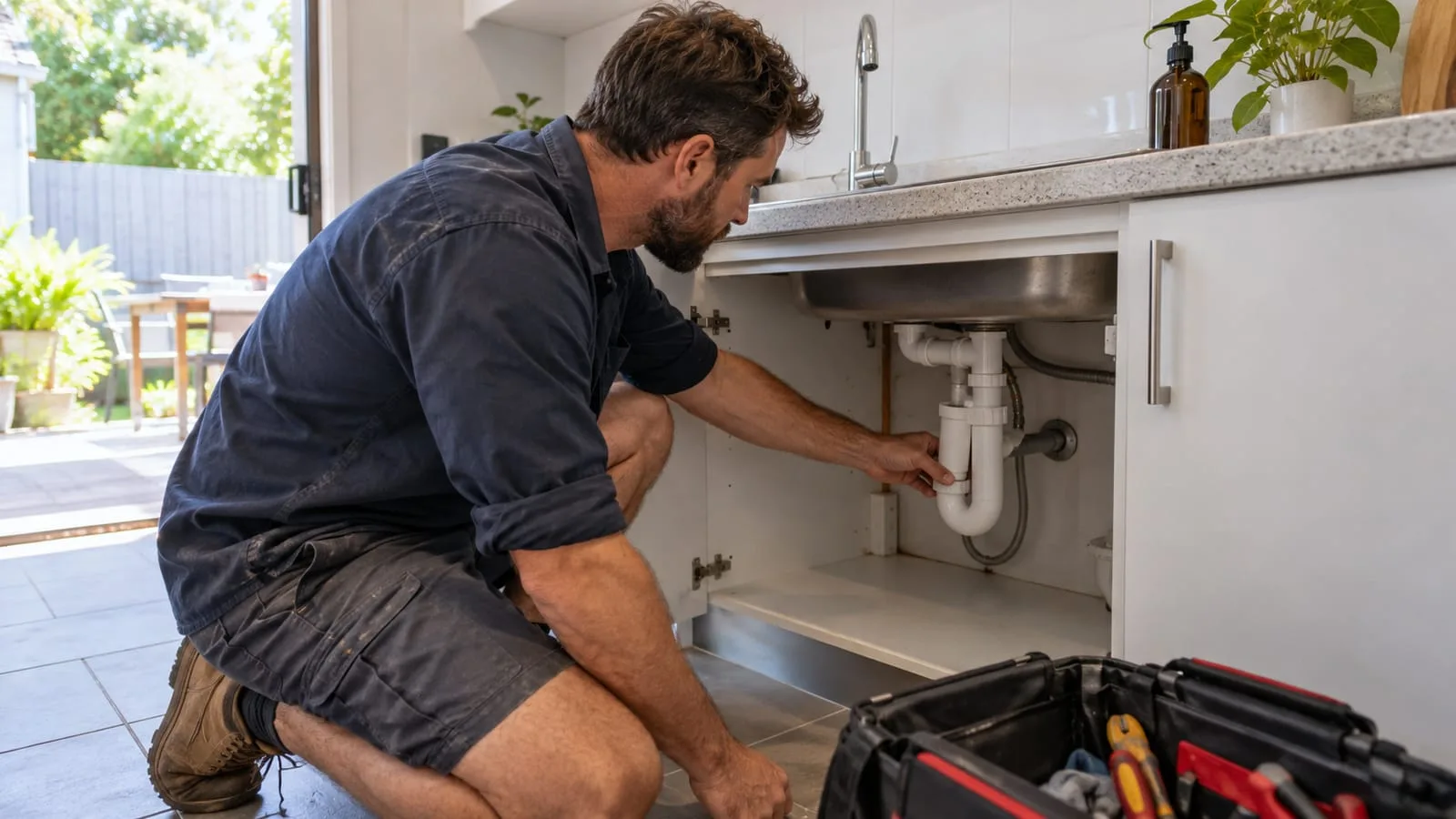
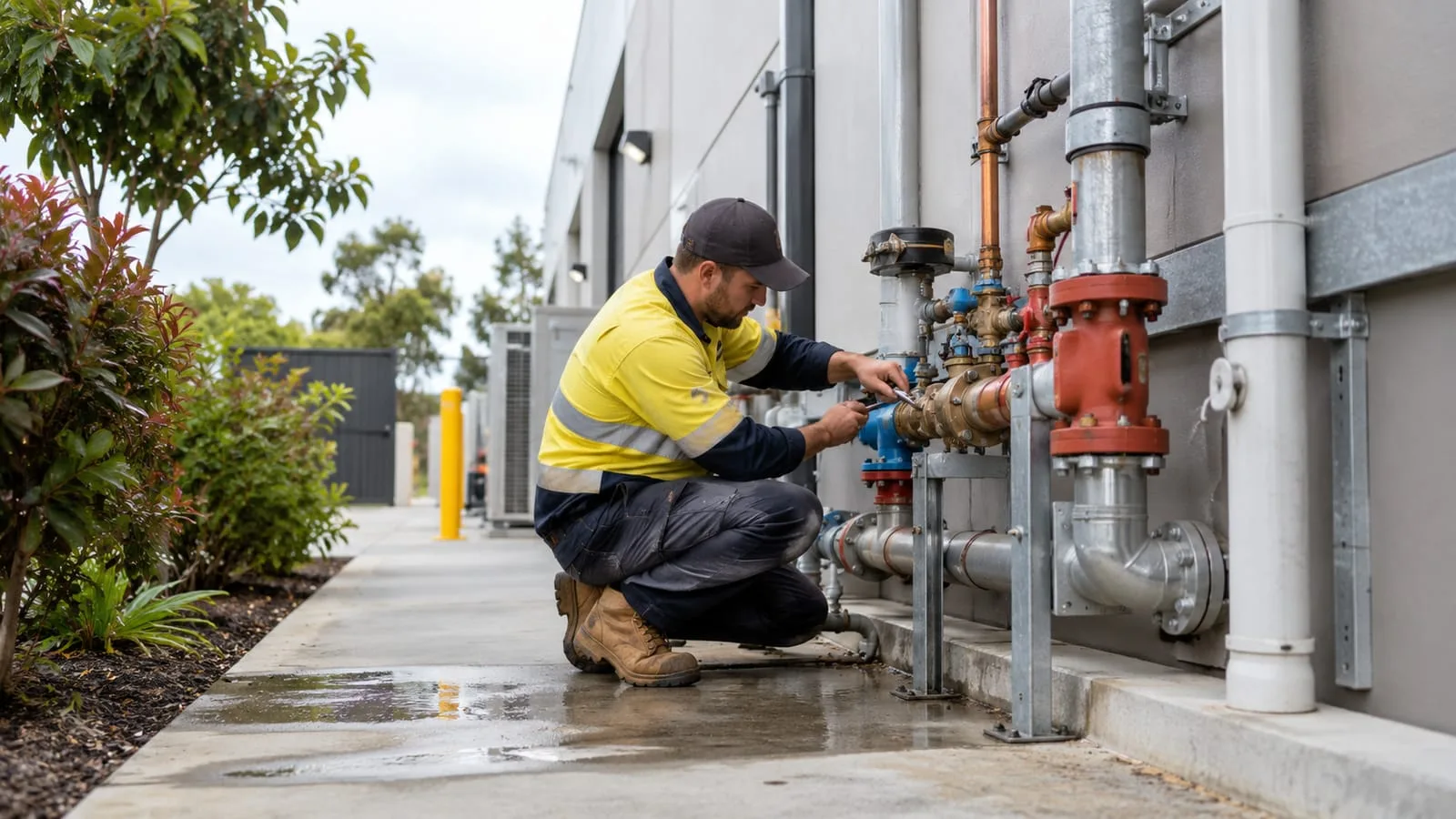
No single method suits every installation. Access, pipe material and condition need to be considered before selecting a cleaning approach.
Ask what is causing the recurrence. An inspection may help determine whether the drain needs a different response.
Describe the affected fixtures, when the problem started and any earlier blockages or repairs. Mention known inspection points and access restrictions.
Cleaning and pipe repairs are different scopes. Ask how any damage found during the work will be recorded and discussed.
Mention available drain openings, locked areas, shared spaces and parking constraints. Confirm the access arrangements before a visit.
Ask what was cleared, which sections were accessible and whether further investigation is suggested. Keep any supplied records for future maintenance discussions.